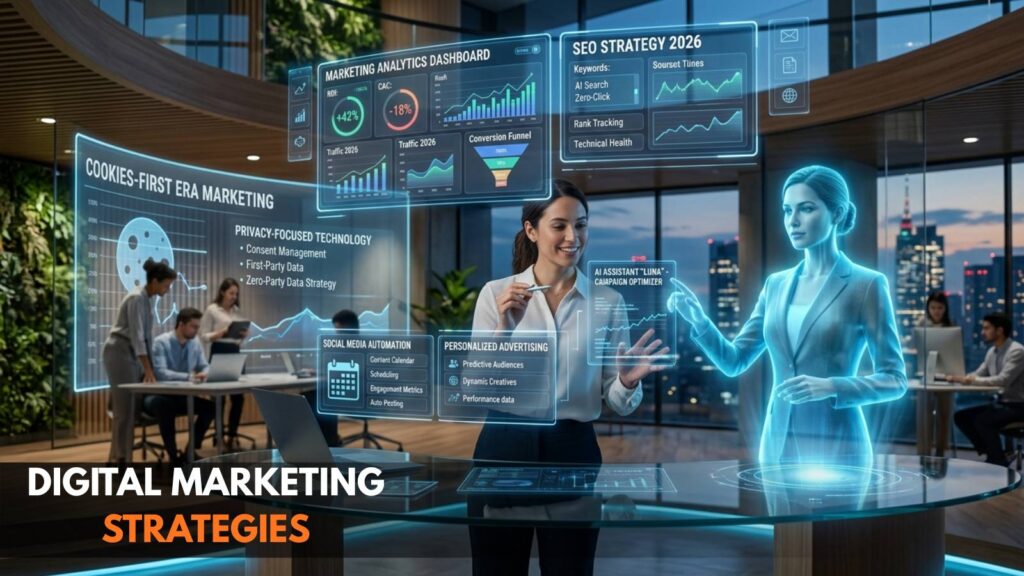
Digital Marketing Strategies are evolving faster than ever before as businesses enter a new era shaped by artificial intelligence, privacy-focused technologies, and changing consumer behavior. The traditional methods of relying heavily on third-party cookies, broad advertising campaigns, and keyword-focused SEO are gradually losing effectiveness in 2026.
Today’s consumers expect personalized experiences, but they also demand stronger privacy protection. At the same time, AI-powered search engines and automated marketing systems are transforming how users discover information, interact with brands, and make purchasing decisions online. According to Google Privacy Sandbox, the future of advertising is moving toward privacy-safe technologies that reduce dependence on traditional user tracking methods.
As a result, businesses that fail to adapt their Digital Marketing Strategies to this cookieless, AI-first world may struggle to maintain visibility, engagement, and customer trust. Brands now need smarter approaches focused on personalization, transparency, and meaningful customer experiences instead of aggressive tracking and mass promotion.
What a Cookieless, AI-First World Means for Businesses
The decline of third-party cookies is one of the biggest shifts affecting digital marketing in 2026. Browsers and technology companies are introducing stronger privacy controls, making traditional ad targeting strategies less reliable than before.
At the same time, artificial intelligence is changing how people search online. Users are increasingly relying on conversational search, AI-generated answers, and voice-based queries instead of typing simple keywords into search engines. Insights shared by Google Search Central show that modern search engines are becoming more focused on understanding user intent and delivering direct answers.
Because of this transformation, businesses must now focus on:
- Understanding customer intent
- Building trust-driven marketing systems
- Delivering personalized experiences
- Creating privacy-friendly engagement strategies
Companies that adapt quickly to these changes will gain stronger customer loyalty and long-term growth opportunities.
First-Party Data Is the New Marketing Power
As cookie-based tracking disappears, first-party data is becoming one of the most valuable assets in modern Digital Marketing Strategies. First-party data includes information collected directly from customers through website interactions, purchases, email subscriptions, surveys, and loyalty programs.
Unlike third-party tracking, first-party data is more accurate, ethical, and privacy-friendly. Customers are also more willing to share information when businesses provide real value in return, such as exclusive content, personalized recommendations, or member benefits.
Businesses in 2026 are increasingly investing in:
- Email newsletters
- Membership communities
- Interactive surveys and quizzes
- Loyalty programs
- Customer feedback systems
These strategies not only improve personalization but also strengthen long-term customer relationships and trust.
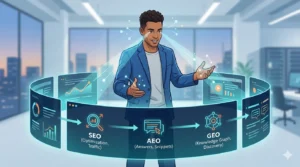
AI-Powered SEO and the Future of Search
Search engine optimization is evolving rapidly in the AI-first era. AI-generated search summaries and conversational search experiences are reducing traditional website clicks, creating what marketers now call the “zero-click search” trend.
Modern SEO is no longer only about ranking for keywords. Search engines are increasingly prioritizing websites that demonstrate expertise, authority, and real value for users. According to Search Engine Journal, businesses focusing on user intent, topical authority, and high-quality content are more likely to succeed in AI-powered search environments.
Successful SEO strategies in 2026 now focus on:
- Creating topic-focused content
- Answering user questions naturally
- Optimizing for conversational search queries
- Building trust and authority
- Publishing research-backed and experience-driven content
Businesses that continue using outdated SEO methods may struggle to maintain visibility in increasingly AI-driven search results.
Content Marketing in 2026: Quality Over Quantity
The rapid growth of AI-generated content has created massive competition online. Because of this, originality, trust, and human expertise are becoming more important than ever. Publishing hundreds of low-quality articles is no longer an effective content strategy.
Instead, successful brands are focusing on:
- Educational and solution-oriented content
- Human expertise and storytelling
- Experience-based insights
- Interactive and engaging content formats
- Regularly updated and accurate information
Search engines now reward content that demonstrates EEAT — Experience, Expertise, Authority, and Trust. In the AI-first world, human-focused content is becoming a major competitive advantage.
Social Media and AI-Driven Personalization
Social media platforms are also becoming heavily AI-driven. Algorithms now prioritize personalized and highly engaging content experiences. Short-form videos, interactive posts, and community-driven engagement continue to dominate audience attention across platforms.
AI tools are helping businesses automate:
- Content recommendations
- Audience targeting
- Customer interactions
- Campaign optimization
- Performance analysis
Find best SEO Automation & Marketing Tools
However, users are becoming more selective about the brands they trust. Authentic communication and meaningful engagement now perform better than overly promotional content.
Brands that focus on storytelling, community building, and personalized experiences are creating stronger digital relationships with their audiences.
Privacy-First Advertising and AI Automation
Digital advertising is shifting from invasive tracking toward contextual and AI-powered targeting. Instead of following users across multiple websites, AI systems now analyze audience intent and content relevance to deliver smarter advertising experiences.
AI automation is also improving campaign performance through:
- Smarter audience targeting
- Predictive analytics
- Automated ad optimization
- Better budget allocation
- Real-time campaign tracking
At the same time, businesses must prioritize transparent data practices and customer privacy. Trust is becoming one of the most important factors influencing long-term business growth.
As the digital world becomes increasingly AI-first and privacy-focused, adaptability will become the most important skill for businesses aiming to remain competitive in the future of digital marketing.
FAQs
1. Is SEO still important in 2026?
Yes, SEO remains important, but modern SEO focuses more on user intent, authority, and conversational search optimization.
2. Can AI-generated content rank on Google?
Yes, AI-generated content can rank if it is original, informative, accurate, and provides real value to users.
3. What is zero-click search?
Zero-click search happens when users get answers directly on search pages without visiting a website.
4. Will AI replace digital marketers?
No, AI will support marketers through automation, but human creativity and strategy will still remain essential.
5. What is contextual advertising?
Contextual advertising targets users based on webpage content instead of tracking their browsing behavior.