
Backlinks are no longer about quantity. In 2026, Google’s algorithm—and AI systems like ChatGPT, Gemini, and Perplexity—evaluate trust, relevance, and context, not just link count.
Many website owners still build hundreds of backlinks but see no ranking improvement. Why? Because most of those links are either ignored or carry zero value.
This guide will help you understand:
- Why your backlinks may not be working
- What Google actually counts
- What to remove, ignore, or improve
- A proven strategy to build authority in 2026
1. The Biggest Myth: “More Backlinks = Better Ranking”
This is outdated. It worked before 2011, but today Google ignores such tactics and focuses on quality over quantity. Modern SEO prioritizes authority, relevance, and context over sheer backlink volume.
In 2026:
- 100 low-quality backlinks = almost no impact
- 5 high-quality backlinks = strong ranking signal
Google does NOT average backlinks like math.
Instead:
- It ignores weak links
- It rewards trusted, relevant links
2. Why Low-Quality Links Still Appear in Google Search Console
Many people panic when they see spammy domains in Search Console. This is completely normal. Google discovers links from across the web—good, bad, and irrelevant—and lists them in Search Console for transparency. However, this does not mean all of those links are influencing your rankings. Most low-quality or unrelated links are simply crawled and recorded, not counted as ranking signals.
Important clarification:
- Google Search Console shows all discovered links
- It does NOT mean Google values them
Think of it like:
- Search Console = Inbox (everything received)
- Google Algorithm = Filter (what actually matters)
So yes, those links are visible—but most are simply ignored. Don’t worry about every spammy domain you see, your focus should be on building high-quality links that send strong authority and relevance signals.
3. Types of Backlinks (2026 Reality)
Not all backlinks are created equal, and in 2026, understanding the difference is more important than ever. Search engines no longer treat every link as a positive signal—some are ignored, some can harm trust, and only a few actually contribute to rankings. To build an effective SEO strategy, you need to clearly identify which types of backlinks add value and which ones are simply noise. Below are the three main categories of backlinks you should know.
3.1 Low-Value Links (Mostly Ignored)
- Directory submissions
- Profile links (LinkedIn, Medium, etc.)
- Web 2.0 spam
- Auto-generated sites
👉 These do NOT help rankings anymore.
3.2 Toxic Links (Potential Risk)
- Spam networks / PBNs
- IP-based links
- Irrelevant or suspicious domains
- Over-optimized anchor spam
👉 These may affect trust if overused.
3.3 High-Quality Links (What Actually Works)
- Editorial links from niche websites
- Guest posts on real blogs
- Mentions in industry articles
- Links from pages with traffic
👉 These drive rankings, authority, and AI visibility.
4. Do You Need to Remove Bad Backlinks?
Short Answer: No (in most cases)
You should NOT:
- Log into hundreds of sites to remove links
- Spend weeks cleaning everything
Why?
Because Google already ignores most low-quality links.
When You SHOULD Take Action
Only if:
- You see clearly spammy or toxic domains
- You used aggressive link-building strategies
- You have repeated keyword anchor spam
5. The Right Way to Handle Bad Links
Use Google Disavow Tool
Instead of removing links manually, you can tell Google:
“I don’t trust these links. Please ignore them.”
Example:
domain:spamdomain1.com
domain:randomsite123.net
domain:123.45.67.89
Best practice:
- Disavow only 10–20 worst domains
- Do not overuse this tool
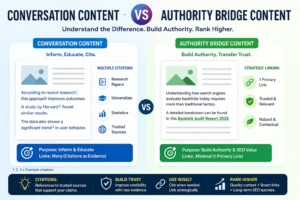
6. High Authority vs Contextual Backlinks (Critical Difference)
Not all powerful backlinks work in the same way, and this is where many people get confused. In modern SEO, both the authority of the website and the placement of the link play an important role in determining its impact. A link from a highly trusted site builds credibility, while a link placed naturally within relevant content strengthens context and relevance. To fully understand how backlinks influence rankings, it’s important to distinguish between high authority backlinks and contextual backlinks—and how combining both creates the strongest possible SEO signal.
High Authority Links
- Focus on who is linking to you
- Example: A trusted tech blog mentioning your site
- Builds trust and credibility
Contextual Links
- Focus on how the link is placed
- Inside article content (not footer/profile)
- Builds relevance and ranking power
Best Case Scenario
A contextual link from a high-authority niche site.
This is the most powerful backlink you can get.
7. What Actually Works in 2026 (Proven Strategy)
Instead of building hundreds of weak links, focus on:
Ideal Backlink Profile
- 10–20 high authority niche links
- 5 PR mentions
- 10 contextual guest posts
- 5 links from real traffic pages
8. Practical 30-Day Execution Plan
A strategy is only as good as its execution. Instead of chasing hundreds of random backlinks, the real results in 2026 come from a focused, consistent approach. This 30-day execution plan is designed to help you build high-quality, relevant backlinks step by step—without overwhelming your workflow. By following a weekly structure, you’ll move from foundation building to authority growth in a practical and measurable way.
Week 1
- Create 2 authority profiles (business listings)
- Publish 1 high-quality article
Week 2
- Publish 1 guest post
- Publish 1 technical article (developer platform)
Week 3
- Release 1 PR article
- Start outreach to niche blogs
Week 4
- Publish 2–3 guest posts
- Build presence on AI platforms
9. Common Mistakes to Avoid
Even with the right strategy in place, many websites fail to see results because of avoidable mistakes. In 2026, SEO is less about doing more and more about doing things correctly. Chasing quantity over quality, relying on outdated tactics, or building irrelevant links can slow down your growth or even harm your site’s credibility. Understanding these common mistakes will help you stay focused on what actually works and ensure your backlink strategy delivers long-term results.
- Building backlinks from random, irrelevant sites
- Overusing exact keyword anchors
- Relying on directories and classified sites
- Ignoring content quality
- Focusing on quantity instead of authority
10. The New SEO Formula
In 2026, backlinks are no longer judged by quantity alone. Search engines evaluate links using a more refined approach that focuses on three core factors working together:
Ranking in 2026 is based on:
Authority × Relevance × Context
If any of these is missing, your backlink loses value. This isn’t just a formula—it’s a filter. Each factor plays a critical role, and if even one is missing, the overall value of a backlink drops significantly.
- Context is about how the link is placed. Links embedded naturally within meaningful, informative content are far more powerful than those placed in footers, sidebars, or author bios.
- Authority refers to the trust and credibility of the website linking to you. Links from well-established, reputable sites signal that your content is reliable.
- Relevance ensures the linking site and content platform are related to your niche. A backlink from a closely related industry carries far more weight than a random mention.
Conclusion
Backlinks still matter—but only the right ones.
You are not losing rankings because of bad links.
You are losing rankings because of a lack of strong, trusted links.
Focus on:
- Building real relationships
- Publishing valuable content
- Earning links, not creating spam
That’s how modern SEO works.
Think of it this way:
A high-authority link without relevance looks unnatural.
A relevant link without authority has limited impact.
And a link without proper context is often ignored.
To rank effectively, your backlink profile must balance all three—building trust, maintaining topical alignment, and ensuring natural placement. This is what separates modern SEO strategies from outdated link-building tactics.